From birth to adolescence, Montessori education is one continuous journey.
Meet the AMI trainers and Montessori leaders who will help us explore that journey together in Prague.
23–25 April 2027 • Prague

The Prague Montessori Congress 2027 brings together voices from every plane of development.
From the first years of life to adolescence, our speakers represent decades of classroom experience, research, training, leadership, and work within the global Montessori community.
This is an opportunity not only to learn from experts, but to engage in conversations that connect the whole Montessori journey.
AMI trainers, Montessori practitioners, school leaders and researchers from around the world.
Their workshops and lectures bring practical tools, real case studies and fresh perspectives from Montessori classrooms and schools today.
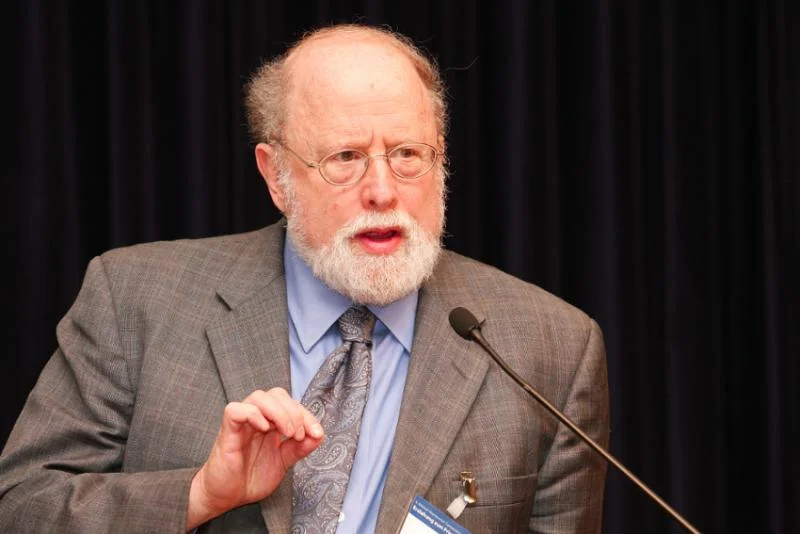
AMI 12–18 Course Director
Keynote: Into Adulthood: Montessori and the Fourth Plane of Development
Joining live online

Red Maple Montessori, Canada
Workshop: What Is the Child Really Telling Us? The Power of Observation

Mountain West Montessori, USA
Workshop: Breathe First: Guiding Children to Name, Feel, and Breathe Through Their Emotions

Montessori Academy Bilingue, Italy
Workshop: Understanding Boys in the 3-6 and 6-12 Environments: the child behind the gender and practical ways to reach them.

Escuela del Alba, Argentina
Lecture: From Traditional to Montessori: What Does It Take to Transform a School?

Escuela del Alba, Argentina
Lecture: From Traditional to Montessori: What Does It Take to Transform a School?

University of Hradec Králové, Czech Republic
Lecture: Neither Angels nor Demons: Who Are Children in J. A. Comenius’s Educational Thought

Montessori Strausberg, Germany
Workshop: Step In or Step Back? The Role of the Adult in Montessori Adolescent Communities

Montessori Makers Group, USA
Workshop: Is Your Montessori School Prepared to Sustain the Work?

Montessori Care, Norway
Keynote: Montessori Bridge – Building Meaningful Connections Across Generations
Additional speakers, workshops, panel discussions, and special sessions will be announced throughout 2026 and early 2027.
Join our mailing list to be among the first to hear new announcements.
Keynote Speaker
Executive Director of the Association Montessori Internationale, leading AMI’s global work in teacher training, research, development, and Montessori educational projects.
Lynne Lawrence has been Executive Director of the Association Montessori Internationale since 2008. Before that, she served as AMI General Secretary ad interim and headed the AMI Human Resources Committee.
She was Director of Training and Schools at the Maria Montessori Training Organisation, now the Maria Montessori Institute, from 1989. This role placed her at the centre of AMI-recognised teacher training for nearly two decades before she took on the global leadership of the association.
In her role as Executive Director, Lynne actively promotes AMI's involvement in Montessori educational projects in developing countries, alongside teacher training programmes globally, research and development, and the many other areas of the association's work.
AMI 6–12 Trainer
AMI 6–12 Trainer and Director of Training at FCISM Bergamo, continuing one of the oldest AMI elementary training traditions in the world.
Baiba Krumins Grazzini is an AMI 6–12 Trainer and Director of Training at the Fondazione Centro Internazionale Studi Montessoriani, FCISM, in Bergamo, Italy. FCISM is the first and oldest AMI elementary training institute, established by Mario Montessori himself in 1961.
Baiba was Co-Director of Training with Camillo Grazzini from 1992 to 2004 and has been the sole Director of Training at FCISM since 2004. Her work is closely connected with AMI elementary training, cosmic education, and the foundations of Montessori practice for children aged 6–12.
She has lectured internationally in Spain, Ireland, India, and Japan, where she gave the first elementary training course. Through her long work in Bergamo and abroad, Baiba continues the elementary training tradition that has shaped AMI Montessori education across generations.
AMI 12–18 Educator and Writer
A leading voice in Montessori adolescent education, with a long-standing focus on the philosophy, psychology, and educational goals of the 12–18 plane of development.
David Kahn is one of the foremost voices on Montessori adolescent education in the English-speaking world. He holds a B.A. in fine arts and classics from the University of Notre Dame and the AMI Montessori Elementary diploma from Bergamo, Italy.
He has seventeen years of Montessori teaching experience, twelve of them as teaching principal at Ruffing Montessori School in Cleveland Heights, Ohio.
His writing on the philosophy, psychology, and educational goals of Montessori adolescent education has been widely published in the field.
Keynote: Into Adulthood: Montessori and the Fourth Plane of Development
David Kahn and Xavier Barrameda turn to the fourth plane of development, the years from eighteen to twenty-four that Montessori education prepares young people for but rarely follows them into. What does maturity look like when it grows out of a Montessori formation, and what does that ask of the adults and the schools that came before it?
AMI 0–3 Trainer
AMI 0–3 Trainer shaping how Montessori principles are applied from birth, in both the home and the prepared environment.
Heidi Philippart M.A. (Edu), AMI (Dip), lives and works in Amsterdam. She was first introduced to Montessori in the late 1980s and early 1990s while working under the guidance of Patty Wallner (AMI Assistants to Infancy Trainer) and Silvana Montanaro, founder of the AMI Assistants to Infancy programme.
Heidi trained in Denver with Judi Orion at the Assistants to Infancy level and has worked extensively within the 0–3 environment. She is an AMI Trainer at the Assistants to Infancy level, as well as an AMI Trainer of Trainers and External Examiner.
In 1996, she opened her first Montessori school, which she continues to run in the centre of Amsterdam, working with approximately 80–90 families each year.
Her work focuses in particular on supporting parents in the application of Montessori principles and bilingualism in the home environment. She has lectured extensively both in the Netherlands and internationally, including in France, the USA, Australia, Britain, Japan, Vietnam, India, China, and South Africa, on topics such as toilet independence, preparation of the home environment, and the development of the child from birth to three.
AMI 3–6 Trainer
AMI 3–6 Trainer bringing decades of classroom practice and international training experience to early childhood Montessori.
Madlena Ulrich spent her childhood in Germany, where she attended a Montessori Elementary school.
She later moved to Norway and obtained a Bachelor’s degree as a preschool teacher at the University College of Vestfold. She completed her AMI 3–6 training at Mount St. Mary’s Montessori College in Dublin.
Since 1995, she has worked in Montessori classrooms and has been actively involved in the development of Montessori education in Norway through lecturing and serving as Vice President of the national Montessori association (NMF).
In 2008, she began her Training of Trainers, working for two years with Molly O’Shaughnessy in Minnesota and attending a summer course with Ulla Wikefeldt in Sweden.
Since 2010, she has been training students in Norway, working in close collaboration with Carla Foster (AMI 6–12 Trainer). She is also part of the AMI China Faculty and has contributed to courses in China, Russia, Romania, and Thailand, gaining extensive multicultural experience in the application of Montessori pedagogy.
Madlena regularly delivers lectures and AMI certificate courses internationally.
AMI 6–12 Trainer
AMI 6–12 Trainer contributing to the development of AMI timelines and deepening how we present human history to the child.
Carla Foster is an AMI Elementary Trainer originally from California and has been living in Norway since 1995.
She holds AMI diplomas at both the 3–6 and 6–12 levels, from MMI London and the Montessori Institute of Milwaukee. She has worked with children aged 3–6, 6–9, and 9–12 in both private and public Montessori schools.
Carla has been an AMI Elementary Trainer since 2011.
In recent years, she has been part of the creation committee for the new AMI timelines of human beings and the chart of the Family Tree of Hominins, giving her a unique insight into the reasoning behind how human history is presented within Montessori education.
Congress Presenter
CEO of Montessori Institute Prague and Montessori entrepreneur who helps others bring Montessori to their communities.
Mirka Vlčková is the CEO of Montessori Institute Prague. She first came across Montessori when her youngest son was born. As a new mother on maternity leave, with no pedagogical, business or fundraising background and no startup money, she set out to bring Montessori education to her child.
From a volunteer mothers’ group she built a Montessori parent and child program that grew into a thriving Montessori kindergarten and elementary school, where she now serves on the Board. She went on to open and run an international Montessori teacher training center and acquired a farm for the school’s adolescent program. Over the past ten years she has raised more than 2.3 million EUR in grants and other funding.
Today she helps others realize their own Montessori dreams through Montessori business development, project funding, community and association building, and impact-driven growth, including the Montessori Entrepreneurs membership community and the Incubator Program she leads.
Congress Presenter
AMI-trained Montessori educator, Inclusive Education Consultant and Neurodiversity Specialist at Red Maple Montessori, Canada.
Melanie Noble is an AMI-trained Montessori educator, Inclusive Education Consultant and Neurodiversity Specialist whose connection to Montessori began as a child, attending Montessori from Casa through Elementary. With more than 20 years of professional experience, her training includes the AMI Primary Diploma, AMI Inclusive Education training and Montessori Core Principles.
Through Red Maple Montessori, Melanie provides professional development, consultation and mentorship focused on inclusive Montessori practice. She has presented for AMI Canada and AMI/USA and works with Montessori communities to connect observation and pedagogy with contemporary understanding of neurodiversity, executive function, regulation, access and belonging.
Workshop: What Is the Child Really Telling Us? The Power of Observation
When behaviour challenges us, it is easy to jump straight to correction. This interactive workshop invites you to pause and look again through Montessori observation, separating what you see from what you assume.
Using real Montessori classroom scenarios, you will explore how developing skills, emotional regulation, executive function, the environment and adult responses can influence behaviour. You will practise looking for patterns not only in moments of struggle, but also in moments of success, to understand what helps a child engage and thrive.
Leave with a fresh perspective and practical ways to move from “How do I stop this behaviour?” to “What does this child need, and what can I change to help?”
Congress Presenter
Head of School at Mountain West Montessori in El Paso, Texas, and creator of Happy Breathing.
Natalia Bennett is Head of School at Mountain West Montessori in El Paso, Texas, a school approaching its 40th anniversary. Montessori-trained for the first plane of development and deeply trained in breathwork across several modalities, she created Happy Breathing, an integrated program that gives children a language for sensations, emotions and needs, and the Happy Breathing Method certification for guides and school teams.
She founded Montessori on the Border, a professional development initiative, and speaks internationally on the prepared adult, nervous-system regulation and the child’s inner world. Her work rests on one conviction: every child deserves to be deeply heard.
Workshop: Breathe First: Guiding Children to Name, Feel, and Breathe Through Their Emotions
Emotions are happening in the body all the time — big or small — and all emotions are our guide. In this practical 90-minute workshop, Natalia Bennett shares the Happy Breathing approach: simple, classroom-ready breath practices that help adults return to their centered self first. A centered adult opens the door — opens the space — for children to feel, name, and breathe through the awareness of their sensations, emotions, and needs, so they can express themselves and open to their potential. Participants will leave with practical tools and a deeper understanding of the regulated adult. Adaptations for Children's House and Elementary are interwoven throughout.
Congress Presenter
AMI 3–6 guide leading a Casa dei Bambini in northern Italy, father of two and wood craftsman.
Chad Chittenden is an Alaska-born, Montessori father of two, AMI 3–6 guide, and wood craftsman who currently leads a Casa dei Bambini in northern Italy. He is highly recognized for leading community engagement initiatives, such as local fatherhood groups, child safety training, music classes, and woodworking workshops.
For 8 years, before settling down with his family in Italy, Chad co-founded Germany’s first Montessori Early Learning Center alongside his wife, Katelynn, who is an AMI 0–3 guide. Together they created a space for hundreds of families to come together to experience the Montessori Method firsthand and observe as their child’s curiosity, self-esteem, and independence grew from week to week.
Workshop: Understanding Boys in the 3-6 and 6-12 Environments: the child behind the gender and practical ways to reach them.
Boys often present their teachers with a particular set of challenges. This is not universal to all boys, but it is common enough that teachers can recognise: excessive movement or horseplay when perhaps the girls are sitting calmly working, excessive displays of superiority in exchanges with females, underdeveloped emotional skills of communication or connection which lead to uncalled for behaviours, distaste for domestic activities like cleaning or stitching, and many others.
Some may say “boys will be boys”, passing off the differences to biology. Some may say the problems run too deep and there’s nothing I can do. But there is something we can do! Dr. Montessori gives us the tools to understand these issues and how to ‘see the child that has yet to arrive’. To support boys in education, we must learn to see past their gender and find the child underneath — the child who is born with the same potential of normalisation as any other.
In this workshop we will explore the real differences between boys and girls in the Casa dei Bambini (3-6) and Elementary (6-12) environments to discover when the behaviour of a male child is what Dr. Montessori called a ‘superficial personality’— a deviation, or when their behaviour is a natural part of their development. We will also look at ways to respond to both that actually work, and at Grace and Courtesy of appropriate means of interaction, as well as the Practical Life of emotional regulation commonly missing in the experience of boys.
Congress Presenter
Psychologist, researcher and AMI guide, Adolescent Community Director at Escuela del Alba, Argentina.
Larisa is a psychologist, professor and researcher at the University of Buenos Aires, AMI Guide (0–3 and 3–6), Montessori project coordinator, and currently Adolescent Community Director at Escuela del Alba. She is mom to Bruna and Malena. In her free time, she loves reading, cooking, and trying out new recipes.
Larisa presents this session together with Gabriela Santimaría.
Lecture: From Traditional to Montessori: What Does It Take to Transform a School?
Can an established traditional school successfully transform into an authentic Montessori institution? This session explores the real-world case study of converting a 25-year-old school with 400 students between 2 and 18 years old into a Montessori environment. Participants will examine a 10-year strategic plan covering adult preparation, budgeting, facility adaptation, parent engagement, and scaling through campus expansion and Montessori Global School Accreditation.
Congress Presenter
Administrator, teacher and AMI 12–18 guide who manages Escuela del Alba, Argentina.
Gabriela is an administrator, teacher, AMI Guide (12–18), and currently manages Escuela del Alba. She is mom to Lupe. She plays hockey and really enjoys plants, gardening, and traveling.
Gabriela presents this session together with Larisa Santimaría.
Lecture: From Traditional to Montessori: What Does It Take to Transform a School?
Can an established traditional school successfully transform into an authentic Montessori institution? This session explores the real-world case study of converting a 25-year-old school with 400 students between 2 and 18 years old into a Montessori environment. Participants will examine a 10-year strategic plan covering adult preparation, budgeting, facility adaptation, parent engagement, and scaling through campus expansion and Montessori Global School Accreditation.
Congress Presenter
Professor of pedagogy, J. A. Comenius scholar and founder of the Centre for Character Development.
Prof. PhDr. Jan Hábl, Ph.D.: husband, father, teacher, professor of pedagogy, J. A. Comenius scholar, author of books on personal and character development, founder of the Centre for Character Development (cerc.cz), amateur YouTuber.
He has written, among others: Labyrinth Upgrade. An Allegorical Novel (Not Only) for Children (2015), Even When No One Is Looking: Fundamental Questions of Ethical Education (2015), Teaching (and Learning) Through Story (2013), Character Matters (2020), On Being Human(e) (2017), The Problem of Indoctrination (2017).
Lecture: Neither Angels nor Demons: Who Are Children in J. A. Comenius’s Educational Thought
Humanity is precious, yet our capacity for good is inseparable from our capacity for harm. Nearly four centuries ago, Jan Amos Comenius warned that human beings may become “inhuman” and therefore need education to become what they ought to be. But what does that mean? What makes us truly human? This lecture explores Comenius’s understanding of human nature, childhood, and education as the cultivation of humanity.
Congress Presenter
Educator, school leader and international Montessori trainer leading the Montessori Oberschule Strausberg, Germany.
Timo Nadolny is an educator, Montessori practitioner, school leader, and international Montessori trainer from Germany. He holds both the First and Second State Examination in Education, an International Montessori Diploma, and has worked for many years in adolescent Montessori programs.
For nearly a decade, Timo has been involved in the development of Montessori adolescent communities within the Montessori Foundation Berlin. His work focuses on Maria Montessori’s Erdkinder concept, meaningful work, student responsibility, and the connection between education and real life.
He currently leads the development of the Montessori Oberschule Strausberg, where adolescents actively engage in community life, practical work, and entrepreneurial projects through a student cooperative.
Workshop: Step In or Step Back? The Role of the Adult in Montessori Adolescent Communities
When should adults step in, and when is it better to step back? Drawing on authentic experiences from the Montessori adolescent community in Strausberg, Germany, this interactive workshop explores real-life challenges through group discussions, practical dilemmas, and short role-plays.
A special focus is on the voices of adolescents and alumni themselves. Through student-created job advertisements and personal video reflections, we will discover what young people truly need from the adults working alongside them.
Congress Presenter
Founder and Principal of Montessori Makers Group, a Montessori education ecosystem based in Chicago.
Hannah Richardson is the founder and Principal of Montessori Makers Group, a multi-venture Montessori education ecosystem based in Chicago. Her work spans independent, public, charter, and justice-centered Montessori schools, from infant through middle school, as guide, coordinator, head of school, and consultant.
Through MMG she serves as consultant, executive search partner, and operations advisor to Montessori schools across North America. Her Prepared Organization framework is used by heads of school, boards, and leadership teams working to align mission, structure, and practice. She is also the founder of The Peace Rebellion.
Workshop: Is Your Montessori School Prepared to Sustain the Work?
What makes a Montessori school truly sustainable? Great teaching is essential, but even the most dedicated educators can struggle when the organization behind the classroom is not working.
Using Hannah Richardson’s Prepared Organization framework, explore five essential elements of a strong Montessori organization: governance, clearly defined roles, hiring, financial sustainability and equity. Through a practical assessment of your own school and interactive group discussions, uncover hidden challenges, identify what needs to change and explore how to build systems that genuinely support your people and your mission.
Leave with a clearer picture of your school’s strengths and challenges, and begin a practical 90-day action plan to create a stronger, healthier and more sustainable Montessori community.
Keynote Speaker
AMI Auxiliary Trainer for Montessori for Dementia, Disability and Ageing and co-founder of Montessori Care in Norway.
Carolyn Magnussen is an AMI Auxiliary Trainer for Montessori for Dementia, Disability and Ageing (MDDA), a Montessori and Special Education educator with more than 30 years of classroom experience, and co-founder of Montessori Care in Norway. Originally from Wisconsin, USA, she has dedicated her career to applying Montessori principles across the lifespan.
She is co-author of Montessori Miljøbehandling: Mening, Mestring og Glede for Personer med Demens (Cappelen Damm, 2025). Carolyn developed the Montessori Bridge Project to connect Montessori students with older adults through meaningful intergenerational relationships that benefit both generations. She is also the project lead of The Transformative Aging Summit.
Keynote: Montessori Bridge – Building Meaningful Connections Across Generations
Discover how the Montessori Bridge Project in Norway prepares upper elementary and adolescent students to build meaningful relationships with older adults living with dementia. Explore photographs, student reflections and practical examples. Leave with ideas for connecting generations in your community and an understanding of how Montessori education prepares students to address a major challenge of the 21st century: fostering meaningful connections across generations in an increasingly ageing society.
Keynote with David Kahn
Director of Pedagogy and Faculty Development at The Abba’s Orchard School, Philippines.
Xavier Angelo Paez Barrameda is currently in the AMI Elementary Training of Trainers program where he assisted in the 60th and 62nd courses of the Fondazione Centro Internazionale Studi Montessori in Bergamo. He earned his AMI 6-12 Diploma in Milwaukee, his AMI 3-6 Diploma in St. Louis, and his NAMTA Adolescent Orientation certificate in Hershey, Ohio. His family founded The Abba’s Orchard School in the Philippines where he serves as Director of Pedagogy and Faculty Development.
Three days on what children need from us now, in the heart of Prague. April 23 to 25, 2027.
From 23 November the price rises to €497.
Groups of 3 or more are eligible for group pricing. See group rates →